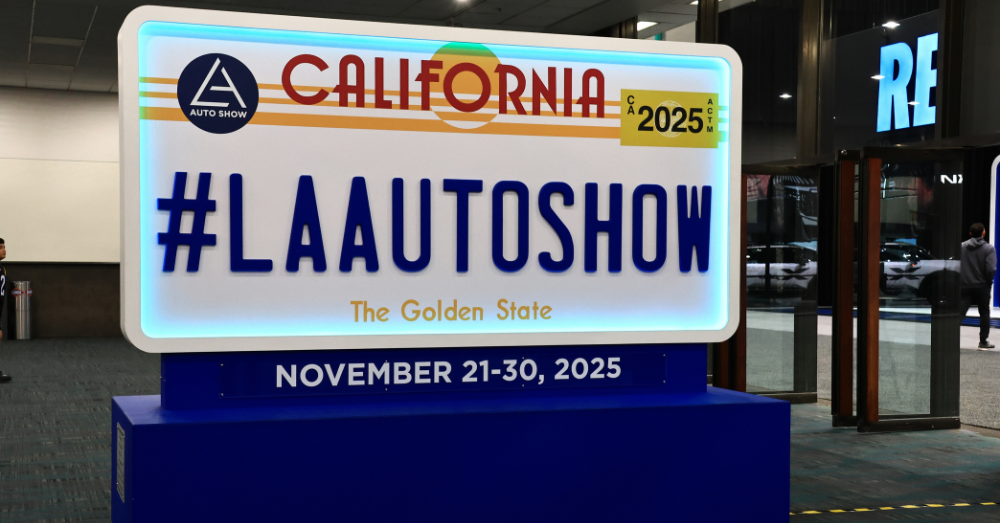
The 2025 LA Auto Show revealed a major shift in the car business. Dealers now need to explain multiple powertrain options to every customer. With hybrids, plug-in hybrids, and fully electric vehicles taking over showroom floors, automakers are ramping up training programs to help sales teams navigate electrified vehicles. From Kia’s new hybrid Telluride to Jeep’s all-electric Recon, the show proved that the future of car shopping requires knowledge of batteries, charging, and electric motors alongside traditional powertrains.
- Dealers at the LA Auto Show faced 65 pure electric vehicles and 60 hybrid models on display, requiring completely different sales approaches for each powertrain type.
- Automakers like Kia, Subaru, and Chevrolet are holding multi-day training events at dealerships nationwide to teach sales staff about battery range, charging infrastructure, and the specific benefits of each electrified system.
- The challenge extends past product knowledge. Dealers must now market to multiple distinct audiences instead of a single customer base, making the sales process harder than it’s ever been.
When Every Customer Conversation Became Three Times Longer
Walk into a dealership today and you’ll notice something different. Sales staff can’t just hand you keys and point to the gas cap anymore. They need to explain charging times, battery warranties, regenerative braking, and whether a plug-in hybrid makes more sense than going full electric. The LA Auto Show made this reality impossible to ignore.
Russell Wager, VP of marketing at Kia America, spelled it out clearly during the show. His team now markets to multiple audiences at once. They’re talking to sedan shoppers, SUV buyers, and EV enthusiasts all at the same time. The 2027 Kia Telluride debuted with an optional turbo-hybrid powertrain that gets 37% better fuel economy than the old V6. That’s about $2,400 in annual fuel savings for someone driving 15,000 miles a year.
But here’s the tricky part: dealers need to explain why someone might want that hybrid instead of the regular gas version or a full EV. Same vehicle, three different conversations.
Training Programs Are Working Overtime
Automakers aren’t leaving dealers hanging. Kia sends trainers to all 800+ U.S. dealerships during new model launches. Subaru runs two to three-day events that mix classroom learning with actual driving time. Their 640 dealers get hands-on experience with hybrids and pure EVs, learning how to talk about the specific benefits of each system.
Chevrolet launched “The Chevrolet Experience” training program in five cities. Sales staff learn about battery range, vehicle value, and charging infrastructure. They even get to drive both Chevy EVs and competitor models. When you’re trying to sell a Chevrolet Equinox EV West Carrollton, OH or anywhere else, you need to know how it stacks up against the Tesla Model Y and Hyundai Ioniq 5.
The Equinox EV starts around $34,995 and offers over 300 miles of range. That’s affordable electric transportation without the luxury price tag. But dealers need to explain DC fast charging, Level 2 home charging, and how regenerative braking affects daily driving. None of that mattered when they were just selling Silverados.
The Show Floor Told the Real Story
Someone actually walked the entire LA Auto Show floor and counted every vehicle. Sixty-five pure electric vehicles. Sixty hybrid models including plug-in hybrids. The entire industry has changed, and dealers are living that reality every single day.
Jeep brought the Recon, their first Trail-Rated EV with 650 horsepower and removable doors. Honda showed the 2026 Prelude hybrid with a sporty two-mode system that mimics gear shifts. Hyundai debuted the Ioniq 6 N that hits 60 mph in 3.2 seconds. Each vehicle needs a completely different sales pitch.
Genesis is pushing performance with the GV60 Magma packing 640 horsepower. Ford’s Mustang Mach-E sits next to the gas-powered Mustang. Nissan’s Rogue PHEV shares floor space with the regular Rogue. Dealers can’t just memorize specs anymore. They need to understand use cases, charging patterns, and total cost of ownership calculations.
The Marketing Challenge Nobody Saw Coming
Jessica Caldwell from Edmunds pointed out that selling hybrids is probably the easiest part. They still have gas engines, so customers understand the basics. Full EVs require explaining charging infrastructure and range anxiety. Plug-in hybrids sit somewhere in the middle with both gas and electric capabilities.
Dealers competing against Tesla face an even bigger challenge. Tesla only sells EVs, so their message stays simple. Multi-brand dealers need to guide customers through gas, hybrid, plug-in hybrid, and full electric options all under one roof.
California saw EV sales hit 24.7% in the third quarter before federal tax credits expired. That’s not a niche market anymore. Drive through any parking lot and you’ll see charging ports where gas caps used to be.
What Comes Next for Dealers
Training programs will keep expanding. Online certification courses, in-person workshops, and ride-and-drive events are becoming standard practice. Organizations like the National Automobile Dealers Association partnered with the Center for Sustainable Energy to launch ElectrifIQ training specifically for EV sales.
Dealers who master this transition will thrive. Those who don’t will watch customers walk out confused, probably to buy from someone who can actually explain the difference between kilowatt-hours and horsepower.
The LA Auto Show made one thing clear: the simple days of gas-only sales floors are done. Welcome to the era where every dealer needs to be part product expert, part charging infrastructure consultant, and part future tech translator.