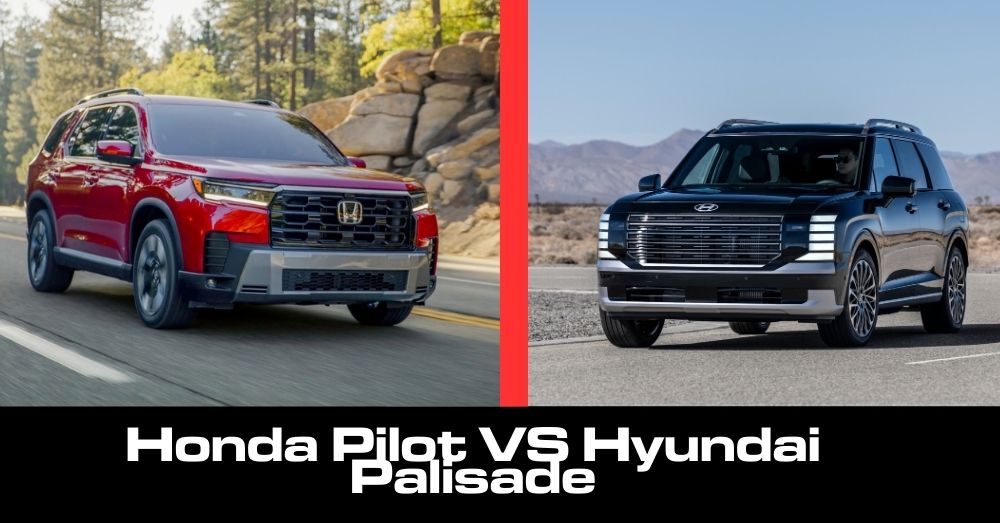
Here’s where things get interesting. Hyundai added an XRT Pro trim specifically for buyers who want some off-road capability without going full-on truck. This version includes an electronic limited-slip rear differential, one inch of extra ground clearance, all-terrain tires, and terrain modes for mud, sand, and snow. It slots in around $50,000.
At the top end, the Limited runs about $52,000 and the Calligraphy maxes out at $57,555 with all-wheel drive. While Hyundai expands its lineup with Hyundai electric vehicles like the Ioniq series, the Palisade also offers something Honda can’t match: a hybrid option starting around $49,000 that gets an estimated 34 mpg combined.
Under the Hood Differences
Both SUVs pack V6 engines, but they’re not identical. The Pilot uses Honda’s 3.5-liter unit making 285 horsepower and 262 pound-feet of torque, paired with a 10-speed automatic transmission. The Palisade’s 3.5-liter V6 produces slightly more at 287 horsepower and 260 pound-feet, running through an eight-speed automatic.
Real-world driving shows subtle differences. The Honda’s 10-speed offers more gear choices for better fuel economy, while Hyundai’s eight-speed has earned praise for smooth, refined shifts. Both SUVs can tow 5,000 pounds when properly equipped, so you’re covered for boat duty or trailer hauling either way.
Fuel economy runs close between them. The Pilot gets an EPA-estimated 19 city and 27 highway with front-wheel drive. The Palisade matches city numbers at 19 but trails slightly on the highway at 25 mpg. Of course, if efficiency matters most, the Palisade Hybrid changes the equation entirely with ratings reaching into the mid-30s.
Interior and Technology Face-Off
The Palisade has always been the interior polish champion in this matchup, and the 2026 redesign doubles down. You get dual 12.3-inch displays (one for gauges, one for infotainment) even on lower trims. Higher-end versions add features like Nappa leather, ventilated second-row seats, and a built-in dashcam. The Calligraphy trim pushes into near-luxury territory with massaging front seats and power-adjustable third-row seating.
Honda responded with its own tech upgrades. That new 12.3-inch touchscreen runs smoother software, and the larger gauge cluster makes information easier to read at a glance. The Touring trim now includes a 360-degree camera that was previously limited to top trims. But objectively speaking, Hyundai’s interior feels a step above, especially in equivalent price brackets.
Both vehicles seat up to eight passengers across three rows. The Palisade offers slightly more rear legroom and headroom, which tall passengers will appreciate on long trips. Honda counters with easier third-row access and a cargo area that swallowed six carry-on bags in testing.
Which Three-Row SUV Gives You More for Your Money
The answer depends entirely on what matters most to you. If you want the lowest possible entry price, Hyundai wins. If you want a hybrid powertrain option, Hyundai wins. If you want the most upscale interior for your money, Hyundai probably wins there too.
Honda’s strengths lie elsewhere. The Pilot TrailSport has better off-road credentials than most Palisade trims, with genuine trail-ready suspension tuning and an available torque-vectoring all-wheel-drive system. The Honda badge also holds its worth better historically, which could matter when you’re ready to trade in.
For families who care most about refinement and technology, the Palisade SEL Premium at roughly $46,000 offers arguably the best balance in either lineup. It includes ventilated front seats, heated rear seats, a 360-degree camera, and that gorgeous dual-screen dashboard. The equivalent Honda experience would cost you several thousand more in a Touring or Elite trim.
Both automakers deserve credit for giving buyers real choices in a segment that sometimes feels like everyone’s building the same vehicle. Whether you lean toward Honda’s proven reliability or Hyundai’s aggressive feature count, you’re getting a capable family SUV either way.