Ford just released a winter guide for EV owners, and while most of the advice sounds obvious at first, the reasons behind it tell a different story. Take their snow removal tip. Sure, everyone knows to clear the windshield, but Ford says you need to get all of it off the vehicle. Every bit of snow on the roof, hood, and trunk needs to go before you hit the road.
- Snow adds weight that cuts into your winter range, which is already taking a hit from cold weather battery performance.
- Driver assistance systems depend on clear sensors and cameras to work properly, and snow coverage shuts them down completely.
- Preconditioning your battery and cabin while plugged in saves energy and gets you warmer faster without draining the battery.
The EV Weight Problem Nobody Talks About
Here’s the thing about driving in winter with an EV. Cold weather already hammers your range because batteries hate the cold. Chemical reactions slow down, and your battery can’t deliver power as efficiently. Then you pile on a few hundred pounds of snow and ice, and you’re asking that struggling battery to haul even more weight around town.
Ford points out that every extra pound matters when you’re already dealing with reduced range. A thick layer of wet snow across your roof and hood can weigh 50 pounds or more. That might not sound like much, but when your battery is working overtime just to keep the cabin warm, you don’t want to waste energy moving snow from point A to point B.
The safety angle is obvious. Snow flying off your roof at 60 mph can cause real problems for the cars behind you. But Ford’s guide focuses on the EV-specific reasons that most people miss.
Your Driver Assists Need Clean Sensors
Adaptive cruise control, lane-keeping, automatic emergency braking, all of these systems rely on cameras and sensors mounted around your vehicle. Cover those with snow, and they stop working. Ford electric vehicles come loaded with driver assistance tech, and winter is when you actually need it most. Slippery roads and reduced visibility make those features useful, but they can’t help if snow is blocking their view.
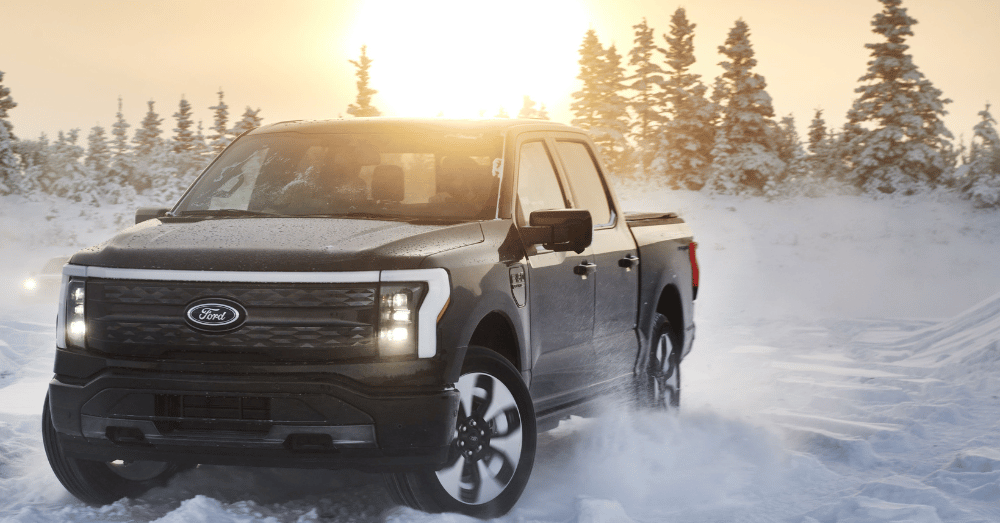
The F-150 Lightning and Mustang Mach-E both use front-facing cameras and radar sensors for their safety systems. A thick layer of snow or ice turns those sensors into expensive paperweights until you clear them off.

Smart Winter Strategies That Actually Work
Ford’s guide covers the usual suspects like keeping your vehicle plugged in when parked. Even if the battery is fully charged, staying connected keeps the battery warmer and ready to perform. Cold batteries charge slower and deliver less range, so maintaining temperature matters.
Preconditioning makes a huge difference. Set a departure time through the FordPass app, and your vehicle warms up the battery and cabin while still plugged into your home charger. You’re using grid power instead of battery power, which means you start your drive with a full charge and a warm interior. Skip this step, and you’re burning battery just to get comfortable.
Use heated seats and the heated steering wheel instead of cranking the climate control to maximum. Those targeted heat sources pull less power than heating the entire cabin. Drop the cabin temperature a few degrees, and you’ll barely notice the difference when your seat and steering wheel are keeping you warm.
Check your tire pressure every week. Cold air makes tires lose pressure fast, and underinflated tires hurt both range and traction. The proper pressure is listed on a sticker inside your driver’s door.
EV Battery Preconditioning Before Fast Charging
If you route to a DC fast charger using your vehicle’s navigation system, the F-150 Lightning and Mustang Mach-E automatically start warming the battery about 20 miles before you arrive. Warm batteries charge faster because the chemical reactions happen more efficiently at higher temperatures. Show up with a cold battery, and you’re sitting at the charger longer while it slowly warms up and accepts power.
Newer models come with Ford’s vapor injection heat pump, which helps heat the cabin more efficiently by pulling less energy from the battery. This tech is standard on 2025 Mustang Mach-E models and 2024 or later F-150 Lightning trucks.
Get Your EV Ready Before Winter Hits Hard
Park in a garage whenever possible. Warmer storage temps help battery performance, and you can safely precondition your cabin while parked inside since EVs produce zero tailpipe emissions. If you don’t have a garage, look for covered parking or spots that get morning sun.
Switch to the right drive mode for conditions. The 2025 F-150 Lightning offers Slippery Mode, which adjusts throttle response and traction control to prevent wheel spin on ice or snow. Mustang Mach-E owners should use Whisper Mode for gentler acceleration and deceleration on slick roads. Consider switching from one-pedal driving to traditional two-pedal driving when roads get icy.
Ford offers 24/7 text support for EV owners who have questions about living with their vehicle in winter conditions. There’s also a Charge Port Weather Kit accessory available to protect your charging port from freezing rain and sleet.