Ford has been losing billions on electric vehicles, but the automaker isn’t backing away from the EV fight. The company is ripping up the playbook and starting over with an entirely new platform and a midsize electric pickup truck that could change how Americans think about affordable EVs. With a targeted starting price of around $30,000, this truck is aimed squarely at budget-conscious buyers who’ve been priced out of the current EV market.
- The first product off Ford’s new platform will be a midsize EV pickup costing around $30,000, with profitability baked in from day one.
- The automaker is investing roughly $5 billion and creating or securing nearly 4,000 jobs across its Louisville Assembly Plant and BlueOval Battery Park Michigan.
- The platform reduces parts by 20% versus a typical vehicle, with 25% fewer fasteners, 40% fewer workstations, and 15% faster assembly time.
Why Ford Scrapped Its Old EV Strategy
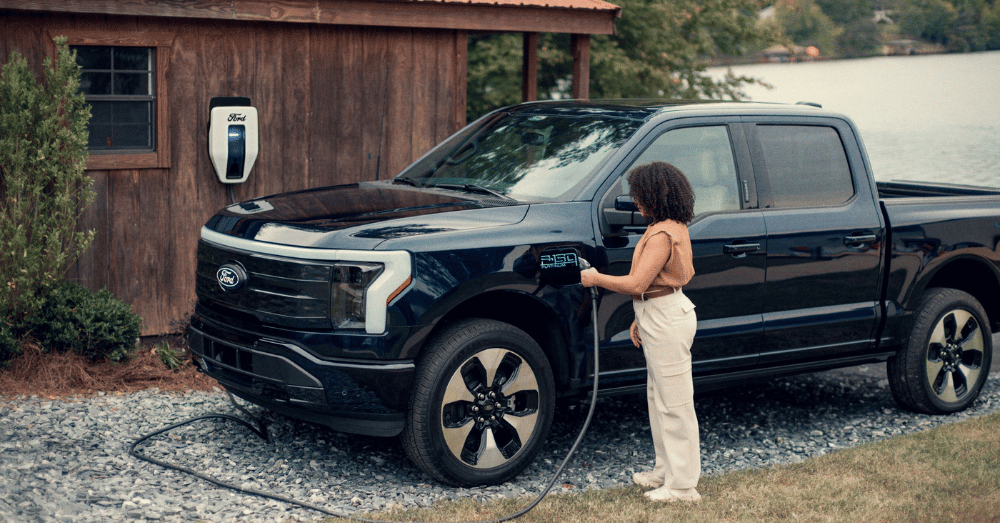
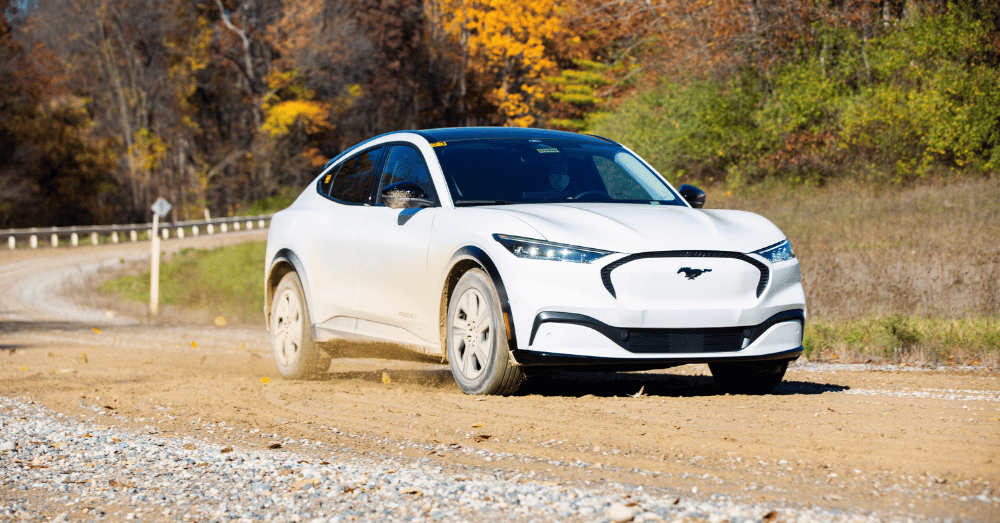
Ford’s first-generation EVs, like the Mustang Mach-E and F-150 Lightning, taught the company a lot about what customers want and how difficult it is to build EVs on a legacy architecture. The problem was that customer demand fell well short of what the industry projected, and the costs were massive, totaling $19.5 billion in write-offs for Ford.
Last year, Ford’s Model e EV unit lost $5.1 billion. The company sold 105,000 EVs, meaning it lost around $48,500 per EV sold. Those are staggering numbers, and they forced a rethink.
Ford pivoted its EV plans and refocused on a new universal electric vehicle (UEV) platform built from the ground up with a “skunkworks” team based in California. That team is led by Alan Clarke, who runs operations out of Long Beach and was a longtime Tesla engineer.
A Pickup That’s Built to Be Cheap and Profitable
Ford designed this truck to be affordable from the start. CEO Jim Farley has said the automaker wants to “start with the most universal car,” adding that “this midsize truck will really not be a truck anymore. It’s more like the ultimate next-generation crossover.”
The new midsize truck is forecasted to have more passenger room than the latest Toyota RAV4, even before you include the frunk and the truck bed. You can lock your surfboards or other gear in that bed, with no roof rack or trailer hitch racks required. The midsize truck will have a targeted 0-60 time as fast as a Mustang EcoBoost, with more downforce.
To keep battery costs low, Ford is going with lithium iron phosphate (LFP) chemistry, a less expensive, cobalt-free battery that trades some energy density for lower cost and improved safety. Batteries represent over 40% of an EV’s total vehicle cost, Ford said, and around 25% of total weight. That makes the battery the single biggest line item to tackle.
The LFP battery packs will be manufactured at Ford’s BlueOval Battery Park Michigan facility. These smaller, cost-efficient cells can be charged to 100% without accelerated degradation.
How Ford is Reinventing the Assembly Line
The U.S. automaker isn’t just building a new truck. It’s rethinking how trucks get built. The new production system reimagines the traditional assembly line into an “assembly tree,” with three separate sub-system lines converging into one. Ford claims this process, combined with the new platform, could speed up vehicle assembly by up to 40%.
The architecture uses 20% fewer parts and 25% fewer fasteners than a typical vehicle. The truck’s wiring harness alone will be 4,000 feet shorter and 22.1 pounds lighter than previous versions. That kind of simplification means fewer things to break and fewer hours on the factory floor.
The Kentucky plant, which currently makes the Ford Escape and Lincoln Corsair, will close for renovations and retooling. It will reopen with 2,200 jobs, though Ford says there will be no layoffs.
The Risks and Opportunities Ahead
Automakers believed that by now, EV penetration in the U.S. would be around 20%, but it has plateaued at around 6% to 8%. That’s a sobering reality for anyone pouring billions into electric vehicles.
Ford’s own F-150 Lightning and the Chevrolet Silverado EV both start at around $50,000. The Tesla Cybertruck starts at over $62,000, and the cheapest Rivian exceeds $70,000. On the gas side, the midsize Ford Ranger starts at $35,000. A $30,000 EV pickup would undercut nearly all of them.
For buyers currently browsing used truck dealerships because new trucks feel out of reach, this price point could be a real turning point. With new vehicles averaging over $50,000 in the U.S., and competitors like the startup Slate offering its own $30,000 EV pickup, there may be a giant EV segment that hasn’t been tapped yet.
Prototypes have already entered the testing phase, with CEO Farley confirming during Ford’s Q3 earnings call that vehicle sourcing is 95% complete and factory preparations are underway. The truck is expected to reach customers in 2027.
Can Ford Pull It Off This Time?
Ford has stumbled before with EVs. The Lightning never turned a profit, the large electric SUV got canceled, and the next-gen electric full-size trucks and vans were recently delayed. But this project feels different. The skunkworks approach, the clean-sheet platform, and a sharp focus on cost reduction all point toward a company that learned from its mistakes.
The American automaker is betting that the pickup form factor, which is hugely desirable in the U.S., combined with the popularity of the compact Maverick, will push sales of a $30,000 EV pickup. If Ford hits that price target while making money on every truck sold, it could reshape the EV market for everyone.